Tag: Soft clothes for kids

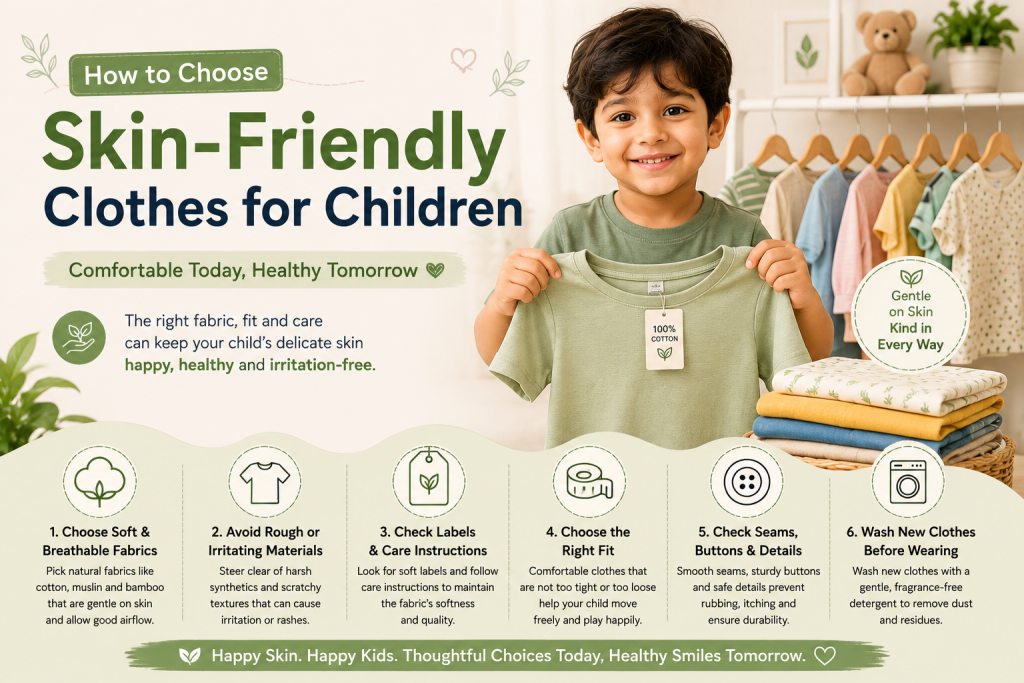
  • How to Choose Skin-Friendly Clothes for Children

    How to Choose Skin-Friendly Clothes for Children

    Children’s skin can be delicate and more sensitive than adult skin, which makes choosing the right clothing especially important. The clothes children wear every day come into constant contact with their skin, so factors such as fabric, fit, stitching, and washing methods can affect their overall comfort.

    Whether you are shopping for everyday outfits, sleepwear, school clothes, or seasonal clothing, choosing skin-friendly clothes for children can help keep them comfortable throughout the day. Here are some useful tips for parents.

    1. Choose Soft and Breathable Fabrics

    The fabric is one of the most important things to consider when buying children’s clothing. Soft, breathable materials can provide better comfort, especially when kids wear them for several hours.

    Cotton clothing for kids is a popular choice because it is lightweight, comfortable, and breathable. For warm weather, lightweight cotton can help children stay comfortable. During colder months, parents can consider suitable layers made from soft, comfortable fabrics.

    Always choose fabrics according to the weather and your child’s daily activities.

    2. Avoid Rough or Irritating Materials

    Some fabrics may feel rough against a child’s skin. Rough textures, stiff materials, or poorly finished fabrics can cause discomfort, particularly when worn for long periods.

    Before buying kids’ clothes, check the inside of the garment. Look for smooth seams and a comfortable finish. If the fabric feels scratchy when you touch it, it may not be the best choice for everyday wear.

    3. Pay Attention to Clothing Labels

    Labels and tags can sometimes become irritating when they constantly rub against the skin. For children who are sensitive to clothing textures, consider garments with soft, printed labels or easily removable tags.

    Parents should also check the care label to understand how the garment should be washed. Following the manufacturer’s washing instructions can help maintain the fabric’s softness and quality.

    4. Choose the Right Fit

    Clothing should neither be extremely tight nor excessively loose. Tight clothes can restrict movement and create unnecessary friction, while very loose clothing may be uncomfortable during play.

    When shopping online, use the kids clothing size chart instead of selecting a size based only on age. Check measurements such as height, chest, waist, and length whenever they are provided.

    A comfortable fit allows children to move, play, and relax freely.

    5. Check Seams, Buttons, and Other Details

    Small clothing details can have a big impact on comfort. Rough seams, poorly finished edges, hard buttons, or uncomfortable zippers may rub against the skin.

    Before purchasing an outfit, check the stitching and finishing. Choose clothes with smooth seams and securely attached buttons. For younger children, also pay attention to small decorative elements and ensure they are securely attached.

    6. Wash New Clothes Before Wearing

    Washing new clothes before your child wears them is a simple habit many parents find useful. It can remove dust, manufacturing residues, or other substances left on the garment during production and packaging.

    Use a suitable detergent and avoid using excessive amounts of fabric products. For children with sensitive skin, parents may prefer gentle, fragrance-free laundry products.

    7. Consider the Weather

    The right clothing also depends on the climate. In hot weather, lightweight and breathable clothing can help children stay comfortable. During winter, layering can provide warmth while allowing parents to adjust clothing as temperatures change.

    For Indian families, considering local weather conditions is particularly important because temperatures can vary significantly between seasons and regions.

    Final Thoughts

    Choosing skin-friendly clothes for children does not have to be complicated. Focus on soft fabrics, comfortable fits, smooth seams, quality finishing, and appropriate clothing for the weather.

    Most importantly, pay attention to how your child feels while wearing the clothes. If they frequently complain about itching, scratching, tightness, or discomfort, consider changing the fabric, fit, or garment style.

    By making thoughtful choices, parents can create a comfortable and practical wardrobe that supports children through school, playtime, sleep, and everyday adventures.